

Citation vs Ticket: Are they the same thing?
There is no difference between a citation vs. ticket. "Ticket" is simply a less formal way of referring to a written document that outlines a driving violation and penalties known as a "citation" for legal purposes. However, if you receive a citation or ticket, you should know how to respond.
Read more Secured with SHA-256 Encryption






Table of Contents
Table of Contents

Insurance Feature Writer
Rachel Bodine graduated from college with a BA in English. She has since worked as a Feature Writer in the insurance industry and gained a deep knowledge of state and countrywide insurance laws and rates. Her research and writing focus on helping readers understand their insurance coverage and how to find savings. Her expert advice on insurance has been featured on sites like PhotoEnforced, All...
Rachel Bodine

Licensed Insurance Agent
Eric Stauffer is an insurance agent and banker-turned-consumer advocate. His priority is educating individuals and families about the different types of insurance coverage. He is passionate about helping consumers find the best coverage for their budgets and personal needs. Eric is the CEO of C Street Media, a full-service marketing firm and the co-founder of ProperCents.com, a financial educat...
Eric Stauffer
Updated February 2025
- There is no difference between a citation and a ticket, except that a “ticket” is a less formal way of referring to the written document that outlines your violation and penalties, known as a “citation” for legal purposes
- Make sure that you know how to respond to your citation, such as fines or court dates, and when you should follow up to avoid further action.
- Citations or tickets can cause increases in your car insurance rates depending on the severity of your infraction.
While it is common to receive citations and tickets for driving violations, such as speeding or parking incorrectly, many people do not understand the slight difference between the terms citation vs. ticket. Some people believe there is a significant difference between citations and tickets, but it is minimal.
Read more below to learn about citations vs. tickets and how they affect your driving record and car insurance rates.
If you have received a citation or ticket, enter your ZIP code into our free quote comparison tool above to find affordable car insurance.
Understanding the Difference Between a Citation and a Ticket
Many drivers often wonder about the difference between a citation and a ticket, questioning if these terms are interchangeable or if there is a legal distinction. Essentially, a citation is a formal term used in legal contexts, whereas “ticket” is a more casual way of referring to the same document.
Whether you receive a speeding citation vs. ticket or a traffic citation vs. ticket, the implications for your driving record and insurance rates are largely the same. Both documents outline the nature of your violation and the necessary steps to address it, such as paying fines or appearing in court.
Regional Variations in Citation vs. Ticket
The terminology and enforcement practices can vary by region, leading to confusion about citation vs. ticket in NC (North Carolina) compared to citation vs. ticket in Texas. While the fundamental meaning remains consistent, local laws and procedures might influence how these terms are used.
For example, a speeding ticket vs. citation in North Carolina might have different fine structures or court requirements compared to Texas. Understanding these regional differences can help you navigate local traffic laws more effectively.
Legal Implications of Citations vs. Violations
When discussing citation vs. violation, it’s important to note that a citation is the document you receive, while a violation refers to the act of breaking a traffic law. A citation by police is a formal notice of your infraction, which could range from minor issues like parking violations to more serious offenses like DUIs.
Understanding the legal weight of a citation vs. charge can help you prepare for potential legal consequences, especially if the citation escalates to a misdemeanor or criminal citation vs. ticket scenario.
Impact on Your Driving Record and Insurance
The difference between a ticket and a citation extends to their impact on your driving record and insurance premiums. Whether you refer to it as a driving citation vs. a ticket or a speeding ticket citation, accumulating these documents can lead to increased insurance rates.
Insurers view a driving citation as an indication of risk, which can result in higher premiums. Knowing how to handle a citation and exploring options for disputing it or attending defensive driving courses can mitigate these impacts.
While a citation and ticket are the same in casual conversation, understanding the nuances and implications of each term can help you better manage your driving record and insurance costs.
Whether you’re dealing with a speeding citation vs. ticket or a criminal citation vs. ticket, being informed about your rights and responsibilities is crucial. Remember, a citation is the same as a ticket, and both require prompt and appropriate responses to avoid further penalties.
Free Insurance Comparison
Compare Quotes From Top Companies and Save
Secured with SHA-256 Encryption
What is the difference between a citation and a ticket?
To make it simple, there is no difference between a citation and a ticket.
So, what is a citation from a police officer? A citation is a written record of something you did wrong while driving or operating your vehicle, including violations that occur while parked. A ticket is just a less formal term for a citation, so “ticket” is often used in casual conversation, while “citation” is typically used for legal purposes.
Does a citation go on your record? Yes, most citations will go on your driving record unless you can successfully dispute the ticket or have the courts reduce your penalties and agree to drop the ticket. Depending on the type of citation, some can end up on your criminal record as well.
Is a citation a charge? In many cases, no, but it may be considered a type of arrest that doesn’t require the officer to go through the arrest process. Some citations, however, may also be considered a misdemeanor, which is a minor criminal charge.
A citation or ticket typically includes information regarding what you did wrong and how to make the situation right, your next steps, and how much time you have to respond. After receiving a citation, you may need to pay a fine, provide proof of insurance, or attend court.
Citations can be given for moving violations and non-moving violations. Non-moving violations are typically some type of parking ticket, but many different types of moving violations can occur. Some of the most common include:
- Speeding. The higher your speed over the posted speed limit, the more severe the consequences of your speeding ticket. You may need to pay a fine and pay more in insurance, plus more depending on past violations.
- Not stopping for a red light or stop sign. These types of citations typically come with a fine, but penalties will vary by what state you are in.
- Driving under the influence (DUI) or driving while intoxicated (DWI). DUIs and DWIs may result in hefty fines, loss of your license, and even jail time. Depending on which state you are in, a DUI or DWI could stay on your driving record for up to 10 years.
- Not using turn signals. While this citation is typically less severe, it can still result in fines and points on your license.
Read more: Does a parking ticket affect your insurance?
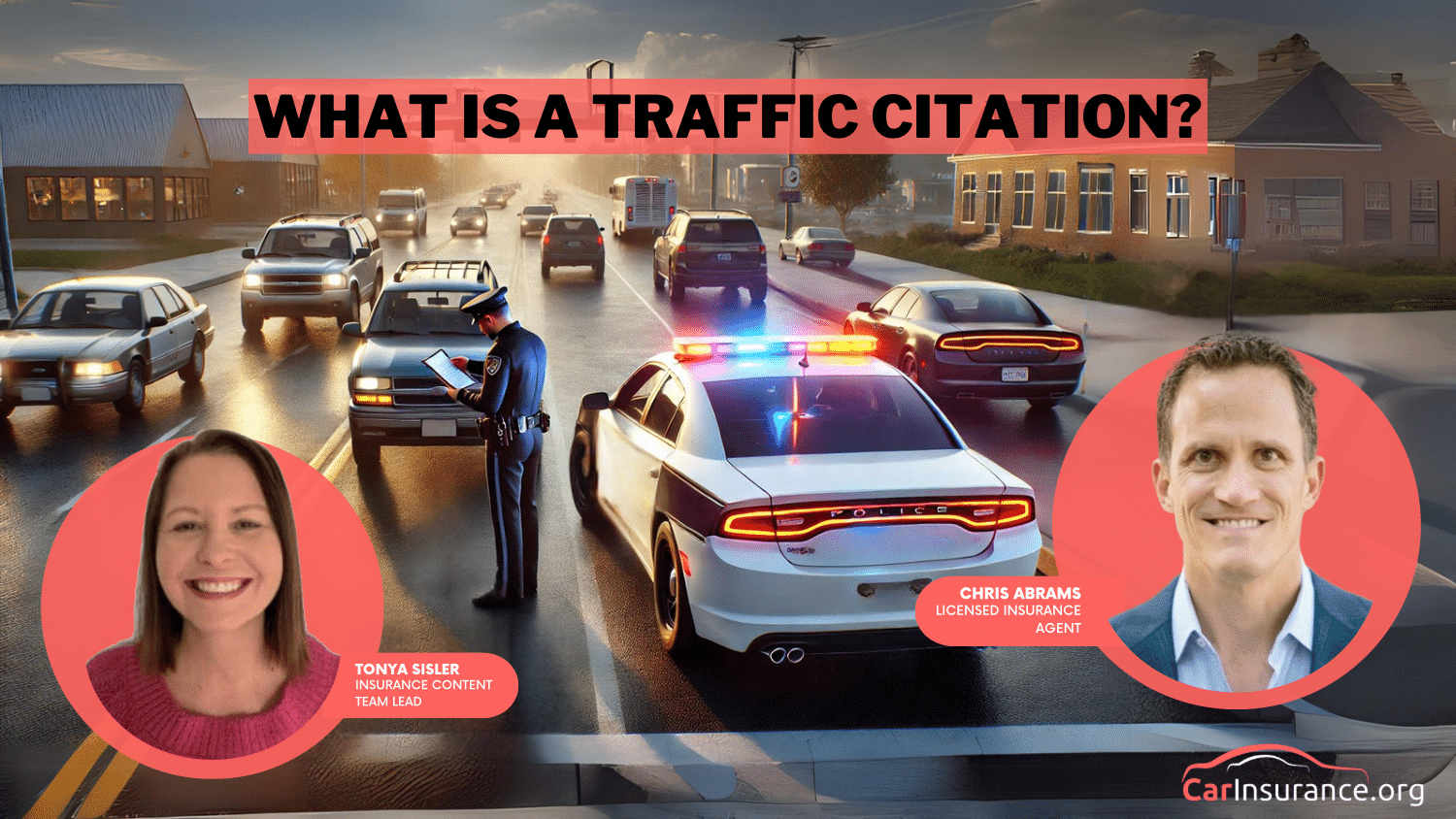
Citations are typically handed out by law enforcement during traffic stops. They will explain the citation and the next steps.
What do I do if I get a citation or ticket?
When you get pulled over, make sure to stay calm and be respectful toward law enforcement. You may need to provide your driver’s license, registration, and proof of insurance. You should answer questions politely, and if you have a plausible reason for your actions, you can voice your side of the story. However, be aware that police officers may have proof of your violation.
If you are issued a citation, make sure you know how to follow up. Make sure you know if you need to pay a fine and when to do so. In addition, if you need to appear in court, make sure you know the court date. Shortly after receiving the citation, you may want to take a few minutes to write down any details you can remember. Include the date and time, weather, obstructed road signs, and anything else you feel may be necessary.
In some cases, drivers may choose to dispute a ticket, which means you will need to appear in court. However, if you don’t fight the ticket, you can go ahead and respond to your ticket in a directed way. You must respond by the date on your citation, or you could face additional consequences, such as misdemeanors or jail time.
If you need to pay a fine, the directions for doing so are typically included on your ticket. Most areas have a way to pay online with a traffic citation lookup, but you may also need to go to a physical place to pay it. You can usually pay with a check, money order, or credit card. In addition, you may also be able to set up a payment plan if you are having a hard time affording the ticket.
Free Insurance Comparison
Compare Quotes From Top Companies and Save
Secured with SHA-256 Encryption
How do citations and tickets affect car insurance?
Let’s take a look at how different driving violations can affect your car insurance rates:
Car Insurance Average Rates by Driving Record
| Driving Record | Monthly Rates |
|---|---|
| Clean Record | $165 |
| One Ticket | $203 |
| One Accident | $244 |
| One DUI | $295 |
The impact on your car insurance rates will be determined primarily by your car insurance company. If you have an otherwise clean driving record but receive a speeding ticket, some car insurance companies won’t raise your rates. You may want to contact your car insurance company to see if there are some ways you can avoid an increase in your rates.
However, if you have more than one infraction on your driving record, there could be more significant increases in your rates. Furthermore, it gets increasingly worse depending on the seriousness of your violation and the penalties you face for those violations. For example, if you have tickets and a DUI that results in you losing your license, your car insurance will be much more expensive, and you could risk losing your coverage altogether.
If you need help finding affordable car insurance for drivers with a citation or ticket, enter your ZIP code into our free quote comparison tool below.
Frequently Asked Questions
Are citations the same as tickets?
Yes, citations and tickets are terms used interchangeably to refer to the written notice issued by law enforcement for a driving violation.
Is a citation bad?
Getting a citation indicates you’ve violated traffic laws. While it’s not ideal, it’s manageable if addressed promptly. Ignoring a citation can lead to fines, increased insurance rates, or legal consequences.
What is the difference between a ticket and a citation?
There is no significant difference between a ticket and a citation. “Ticket” is often used informally, while “citation” is the formal term for the document issued by authorities for a driving violation.
Is a citation worse than a ticket?
No, a citation and a ticket are essentially the same in terms of legal implications. Both outline the violation and the necessary steps to resolve it, such as paying fines or attending court.
What is a citation ticket?
A citation ticket is another way to refer to the document issued by law enforcement detailing a driving infraction. It serves as a formal notice requiring action to resolve the violation.
Does a citation go on your insurance?
Citations generally do not directly impact your insurance policy. However, if the violation leads to points on your driving record or a conviction for a serious offense like DUI, it could result in increased insurance premiums.
Related Articles

Get a FREE Quote in Minutes
Insurance rates change constantly — we help you stay ahead by making it easy to compare top options and save.
Secured with SHA-256 Encryption