

Crashing into Another Car You Own: What Happens?
What happens when you crash into another car you own depends on the type of accident it is, the type of insurance coverage you have, and whether or not you live in an at-fault state. Your insurance rates will likely go up when you crash into another vehicle you own, so enter your ZIP code below to find cheap quotes from local insurance companies.
Read more Secured with SHA-256 Encryption






Table of Contents
Table of Contents

Insurance Claims Support & Sr. Adjuster
Kalyn grew up in an insurance family with a grandfather, aunt, and uncle leading successful careers as insurance agents. She soon found she has similar interests and followed in their footsteps. After spending about ten years working in the insurance industry as both an appraiser dispatcher and a senior property claims adjuster, she decided to combine her years of insurance experience with another...
Kalyn Johnson

Licensed Insurance Agent
Chris is the founder of Abrams Insurance Solutions and Marcan Insurance, which provide personal financial analysis and planning services for families and small businesses across the U.S. His companies represent nearly 100 of the top-rated insurance companies. Chris has been a licensed insurance agent since 2009 and has active insurance licenses in all 50 U.S. states and D.C. Chris works tireles...
Chris Abrams
Updated November 2024
Imagine you’re pulling into your family’s driveway, running late for a holiday dinner, and then — BAM! — you’ve run into another one of your family’s cars, and now you’re definitely doing the dishes after dinner. Even worse, you could be on a family vacation and taking multiple vehicles on a road trip; the lead car slams on its brakes, and the car behind causes a rear-end collision, causing vehicle damage and injuries to the passengers. After the dust settles, how do the insurance claims play out? (For more information, read our “Filing a Car Insurance Claim After an Accident“).
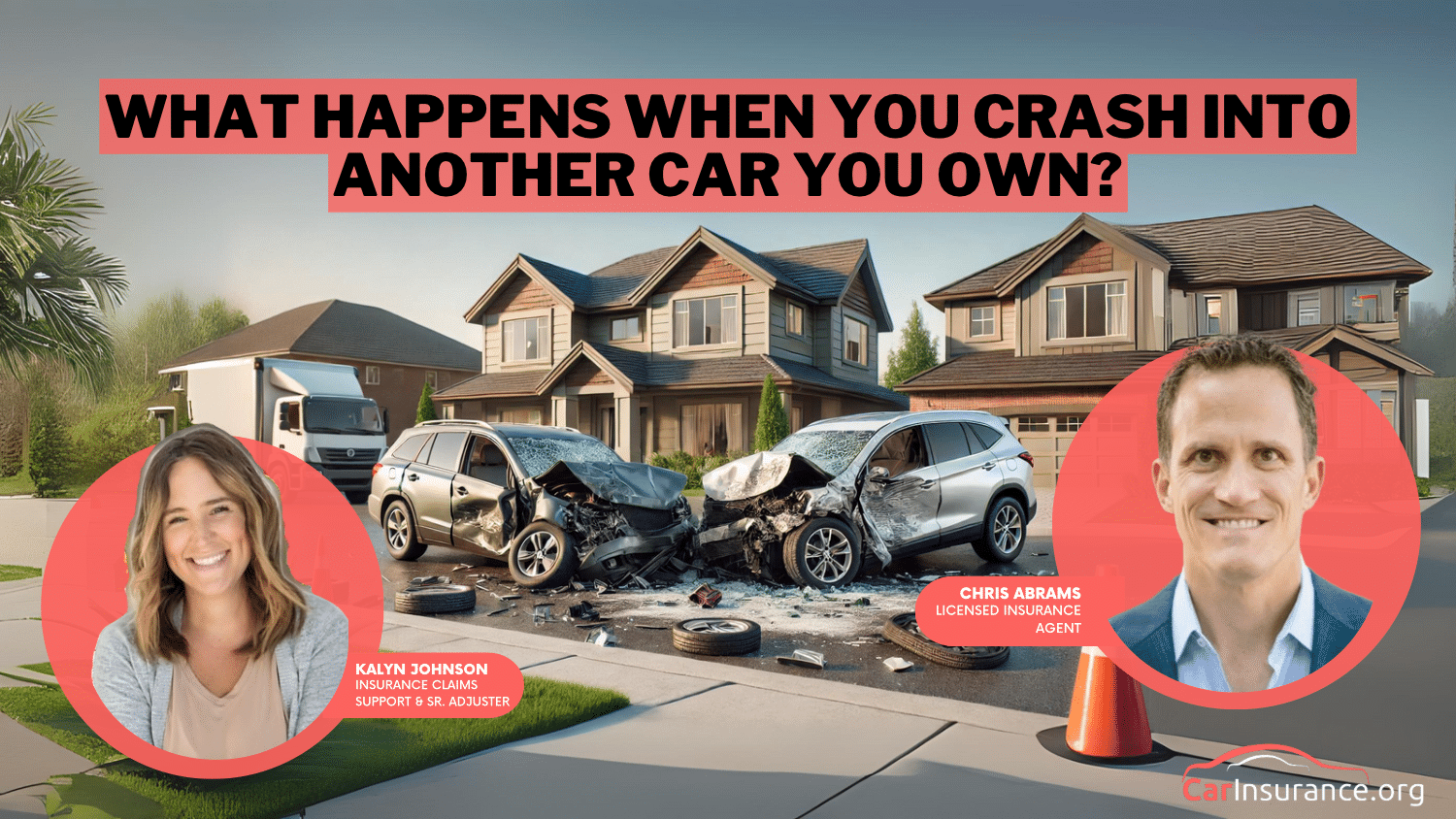
Scenario A: You Run Into A Parked Car
- The “Victim” Car: Your Liability coverage (at least $10,000 is required as minimum coverage in all 50 states) will pay for the “victim” vehicle. If the amount of Liability coverage on your policy won’t cover the damages,
- The At-Fault Car: If you have Collision coverage, you would utilize that to pay for your own car’s damages. If you have no Collision coverage, then you can expect to pay for your own vehicle’s damages out of pocket.
- Your Rates: The rate to insure the at-fault driver would likely increase, but rates on the other drivers in the family would not increase, since they were not directly involved.
Free Insurance Comparison
Compare Quotes From Top Companies and Save
Secured with SHA-256 Encryption
Scenario B: A Crash On The Road
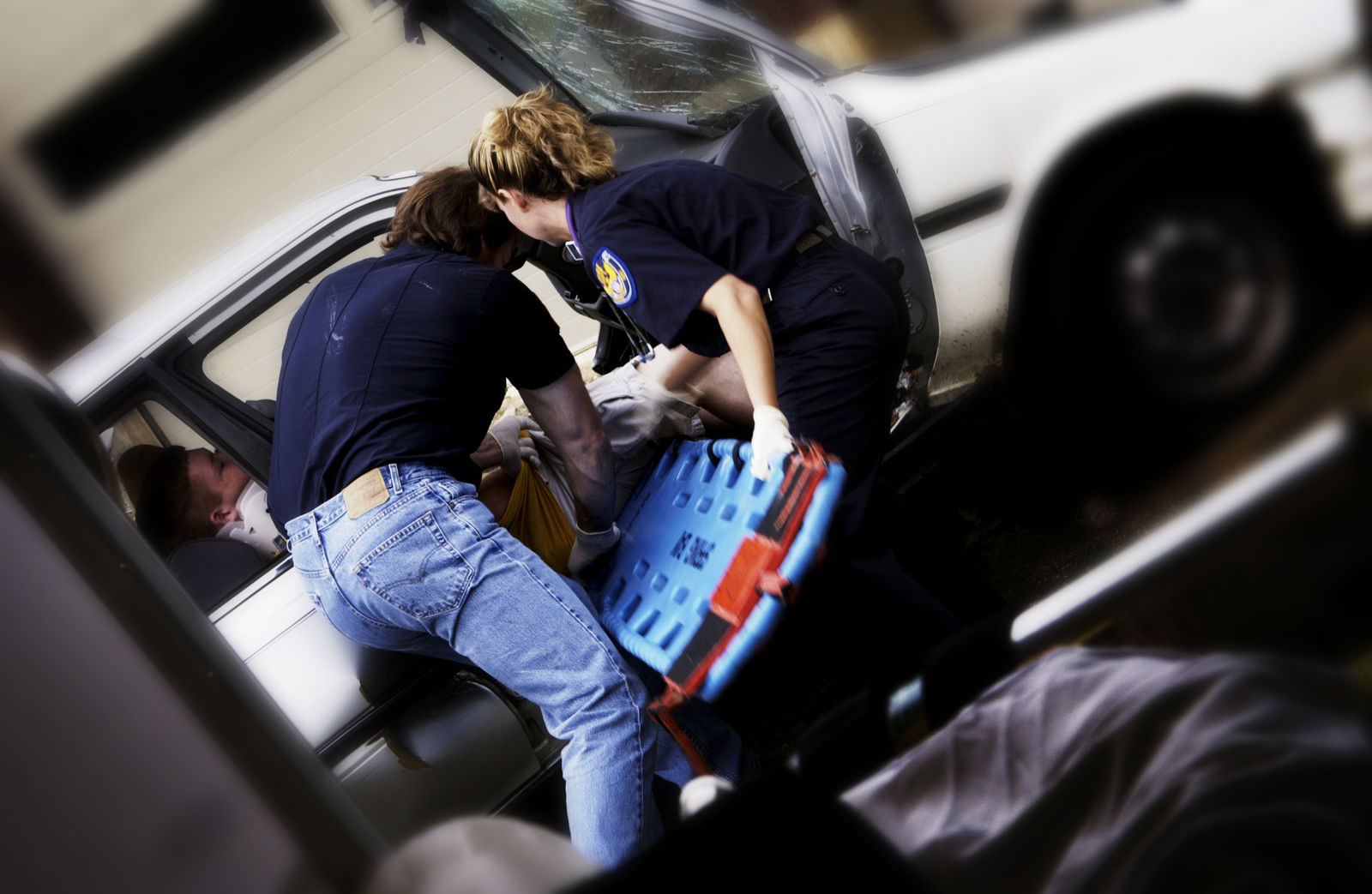
- The “Victim” Car: Property damage will be handled the same way as in Scenario A, however if any passengers are injured, your Liability coverage for Bodily Injury Liability will pay for their medical treatment.
- The At-Fault Car: Again, property damage will be handled with Collision coverage. If the driver or any passengers sustain injuries, their medical treatment would be paid using Personal Injury Protection (PIP). If you don’t elect to have PIP coverage on your policy, you can expect to pay out of pocket for your injuries, or else open a claim on your health insurance.
- Your Rates: The rates of the at-fault driver will most likely increase, and if the “victim” car’s driver is found to be partially at-fault (perhaps for swerving dangerously and contributing to the cause of the two-car crash), then their rates will likely increase, too. If everyone is on the same page about what happened, it may be best to put the blame solely on one driver to avoid multiple rate increases on different drivers.
Scenario C: If Your Insurer Underpays or Denies the Claim
- The “Victim” Car: If you’ve caused an accident on the road where the victims have sustained serious injuries, and your insurance company simply isn’t agreeing to pay for all the repairs to the car, or pay for full medical treatment, or is telling them that they won’t get a settlement for pain and suffering, they may have no option but to take legal action. In this case, the victims of the accident would file a lawsuit against the at-fault driver. This could mean a husband suing a wife, child suing a parent, or sister suing a brother, and so on.
Too often, though, people get nervous about the stigma surrounding a lawsuit and don’t want to sue their relatives. This can be a big win for the insurance company and a big loss for the injured family member. Keep in mind that the legal action against them can be viewed as a technicality to get the at-fault driver’s insurance company to pay. If the at-fault driver’s policy provides for $50,000 in potential payments for Bodily Injury Liability for each injured victim, and the insurer is trying to only pay $12,000, or $30,000, or even $49,990 for a victim’s claim, the victim may have no other option than suing the at-fault driver in order to recover a full payment. As always, consult with a lawyer for legal advice on what to do in this scenario. - The At-Fault Car: If you have Collision or PIP coverage and your insurer is paying for your damages and/or injuries, you may have recourse options against them if they fail to fully pay your accident claim. You’ll have to read your policy to see if it contains clauses for binding arbitration or mediation, or if it stipulates that you would have to sue your insurer for reimbursement if they choose to deny or underpay parts of your claim. Your policy also may limit the time frame in which you have to file a lawsuit. Again, consult with an accident lawyer for any legal advice in this scenario.
- Your Rates: Pursuing legal action or arbitration should not affect your insurance rates, as it has nothing to do with the risk you pose behind the wheel of a vehicle.

Get a FREE Quote in Minutes
Insurance rates change constantly — we help you stay ahead by making it easy to compare top options and save.
Secured with SHA-256 Encryption